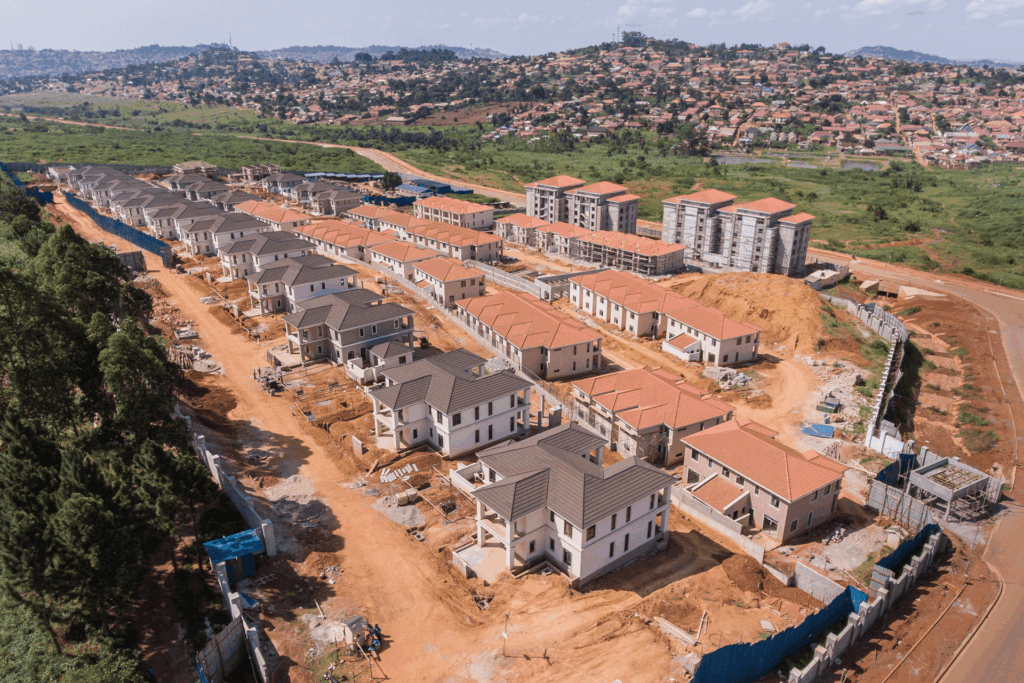
When the Building Control (Amendment) Act 2026 took effect on March 19, many people heard one message and stopped there. Then came a whirlwind of concerns which only stirred fear.
For many non-compliant property owners, one fear tops the list. Will my building be demolished?
Another concern follows fast. What is the cost of the permits? Then comes a third question. What happens if I built in earlier years but did not fully comply with the provisions of the law?
Yet the aim of the law is far from such fear. Read in plain English, the law does not announce a war on homeowners or property owners. It pushes the sector towards order.
Uganda wants safer buildings and stronger enforcement action against unsafe work/structures. This is a public safety law. It is also a public service law.
This is not a brand-new burden
Building control in Uganda did not start in 2026. The subject traces formal regulation of the sector back to the colonial Public Health Act of 1935.
In 2013, the Building Control Act, Cap. 136, which harmonised the scattered laws under one framework, was enacted, now operationalised by the National Building Code, 2019 and the Building Control Regulations, 2020.
Download the Building Control (Amendment) Act 2026 here
The National Building Review Board (NBRB), a body corporate established by the Building Control Act, 2013, under the Ministry of Works and Transport, was also established by the Act and mandated to oversee and regulate Uganda’s built environment. The Act also established Building Committees (BC) at every district and urban authority.
To date, all 177 local governments have already been trained and audited for full compliance of the Building Control process within the national legal framework. Fast forward to 2026, a few aspects of the law have been amended. So, the public should not treat the amendment as a sudden trap. The broader system has existed for years. The amendment updates and strengthens it.
What are the major changes?
The Building Control (Amendment) Act 2026 redefines the composition and powers of the NBRB and BCs, and regulates the use of unconventional construction technologies.
The biggest institutional shift directs that the Board shall now consist of nine (09) members, reducing its composition from 16 members.
These shall include: One representative of the Ministry of Works and Transport, one representative of the ministry responsible for gender, one representative of the ministry responsible for lands, one representative of the ministry responsible for local government, one representative from the Attorney General’s Chambers, one representative of engineers, one representative of architects, one representative of physical planners and one representative of surveyors.
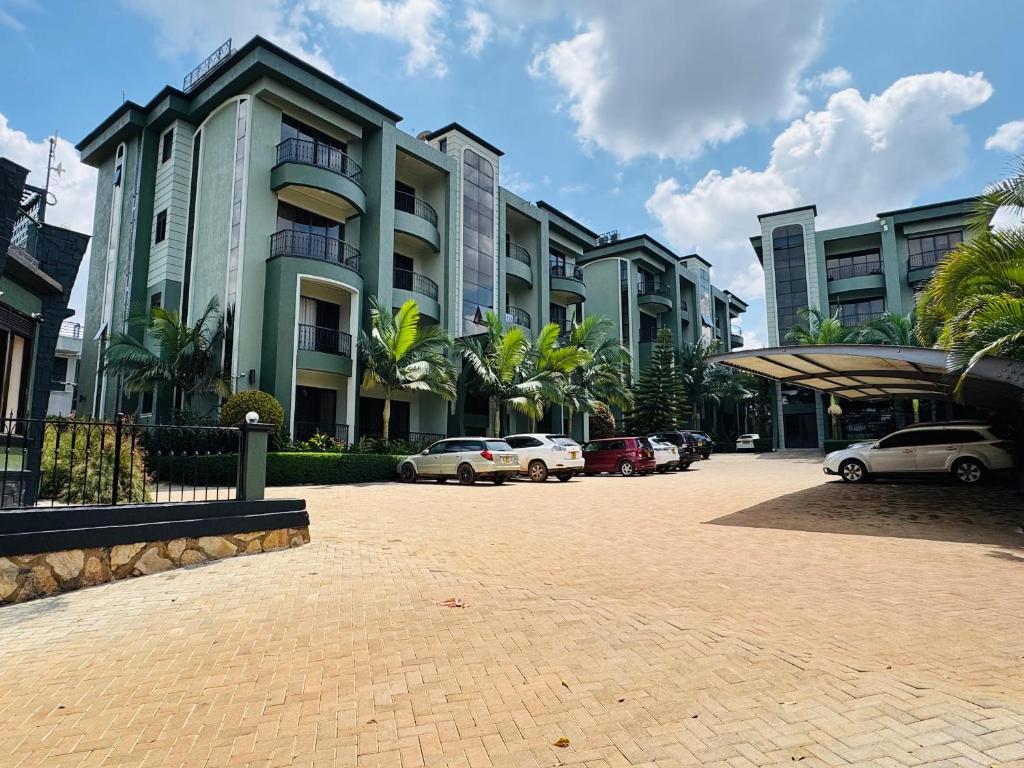
Building Committees (BC) at the district, city and urban councils shall now consist of five officers responsible for engineering, physical planning, health, architecture and environment. Eliminating political leadership and emphasizing membership by technical officers.
For you, this matters because leaner technical structures often mean clearer responsibility. It also introduces a complaints resolution mechanism with the accounting officer for building-related offences.
What this means for you at home or on-site
For a Ugandan who is currently building or is planning on starting construction for a home or any development, the building control process has always provided a clear path. You need approved plans from a BC in your area, and you need the right professionals where the project class requires them.
Therefore, for all developers, the cheaper route is compliance from the start. That is not red tape for its own sake. It protects your investment, protects your family, the public and property.
The process starts before the first bag of cement reaches the site by securing a building permit. The entire process has been made easier through the Building Industry Management System (BIMS), an online system that helps ease tracking of the application process.
The developer is required to submit an application through BIMS and attach the required drawings for the project. Where the class of building requires professional input, registered professionals must take responsibility for the design and supervision. BIMS also handles payment of building control fees and scheduling of inspections.

After submission, the Building Committee in the district, city or urban authority reviews the application. The Committee checks whether the plans meet the Building Control Act, the National Building Code and related regulations.
If more information is needed, the applicant is asked to provide it. If the plans meet the requirements, the Committee issues a building permit. During construction, the developer presents the site for inspection so officers can confirm that the approved plans match the work on the ground.
An occupation permit comes at the end of the project. Once construction is complete, the owner applies for permission to occupy the building. The completed structure is then inspected to confirm safety, compliance and readiness for use. BCs can also issue temporary permits for unfinished constructions.
In simple terms, the building permit allows you to build. The occupation permit confirms that the finished building is ready for public use.
What if approvals delay?
One of the strongest parts of the amendment is simple. If officials delay, you now get a route for redress at first instance.
Where a Building Committee fails to decide a building permit application within the required time, you first complain to the Chief Administrative Officer (CAO) in a district or the Town Clerk in an urban council. Once such a complaint lands, the local accounting officer directs the committee to decide no later than 30 days. If the delay continues, you appeal to the Board.
The law gives a similar ladder for occupation permits. First complaint at the local level. Then a directive. If no decision follows within 14 days, appeal to the Board.
For developers, this means less guesswork. For homeowners, it means less frustration. For professionals, it means a clearer process for project planning and client advice.
Are permits too expensive?
Permit cost is a real concern, especially for small builders. The first point to understand is that fees are not one flat charge for everyone. Fees depend on the building’s size, location, and class.

A Class A building in a city costs UGX 2,200 per square metre, while a Class C building in a city carries a flat fee of Shs 500,000. There are also set parameters for inspection and occupation permits.
That means the honest question is not whether a permit is “expensive” in the abstract. The real question is what class of building you are putting up, where it sits, and what stage your project has reached.
Yet within the pages of the Act, there lies a hard market message: non-compliance costs more. For example, construction without a building permit draws a fine of two currency points for every square metre of built-up area under section 33(1).
Use of a prohibited method or material draws 48 currency points per square metre of area built using such method or material. Negligence leading to injury, death, or destruction of property now attracts up to 500 currency points or imprisonment for up to 12 years, or both.
What about buildings already outside compliance?
This is where public anxiety sits. The amendment does not shut the door on correction. If your building went up without full compliance in earlier years, the smart step is early engagement so as to regularise the building operations.
In simple terms, those with building operations that are still active and non-compliant should seek to acquire a building permit from their area Building Committee.
For completed buildings, including those constructed before the coming into force of the Act, you ought to apply for an occupation permit from the area Building Committee.
Engage professionals to guide you on the necessary processes.
Does the law mean demolitions are coming?
The short answer is that the amendment is not a blanket demolition order. In fact, section 40 and section 28A give BCs room to order remedial action where a building is unsafe, in disrepair, dilapidated, or showing signs of such failure. Demolition sits in the law, but remedial action sits there too.
The power to demolish is based on strict parameters under the building control regulations, which prevent it from being abused by the implementers.
Therefore, the public should read the provisions of the law for what they are. They are safety tools and not a blanket demolition programme announced against every building. The smarter reading of the law is this: Unsafe work must stop. Dangerous buildings must be addressed. Non-compliance must be corrected.
What you should do now
If you plan to build, start with the permit. If you already hold a permit, check the dates and conditions. If your project needs registered professionals, engage them early. If your building records are incomplete, fix that gap now.
If your property went up without full compliance, step forward and regularise where the law provides room.
Do not wait for a notice. Use BIMS. Speak to your Building Committee. Ask questions before work starts or before work continues.
The public message from NBRB should be heard in that spirit. The amendment is not there to punish honest effort. It is there to reduce unsafe construction, shorten confusion, and protect life, property, and investment.
Safe building is cheaper than correction after failure. Lawful building is safer than guesswork. Early compliance is better than late conflict. That is what the amendment means to you.
Key Amendments to the Building Control Act, 2026
- The Act reduces the Board’s membership from 16 to 9 members to improve corporate governance, while retaining representation from key ministries, the Attorney General’s Chambers, and professional bodies in engineering, architecture, physical planning and surveying.
- The Act expands the Board’s mandate to hear and resolve complaints from any person, Building Control Officer, or Building Committee on matters relating to buildings or building operations.
- The Board can now issue stop or evacuation orders where a Building Committee fails to act on its recommendations and building safety is at risk.
- The Board now has broader enforcement powers, including issuing express penalties for strict liability offenses, accessing building sites, procedural guidance to Building Committees, reporting building-related matters to the police, and referring complaints of professional misconduct to the relevant professional bodies for action.
- The Act reduces Building Committee membership from 11 to 5 members, creates the positions of Chairperson and Secretary, and provides that members shall be appointed by the relevant Local Authority Accounting Officers—CAO for districts or Town Clerk for urban councils. These Accounting Officers will no longer sit on the committees, rather act as first instance complaints resolution mechanism.
- The amendment gives Building Committees stronger enforcement powers, including the authority to demolish or order evacuation of buildings constructed contrary to the Act and regulations.
- The Amendment promotes innovation by creating a formal pathway for unconventional building methods, materials and technologies to be assessed, approved, gazetted, and safely adopted for public use.
- The Amendment strengthens penalties for non-compliance with building standards, including building without permits, using prohibited methods, or causing accidents, with higher fines, penalties based on built-up area, and longer imprisonment terms for serious offences.
- Accidents inside completed buildings now carry the same liability as construction site accidents. The fine ceiling rises to 500 currency points. If a building you own, design, or build injures or kills someone through negligence, the law now reaches you regardless of whether construction had ended.