By Herbert Zziwa, Manager Communications – NBRB
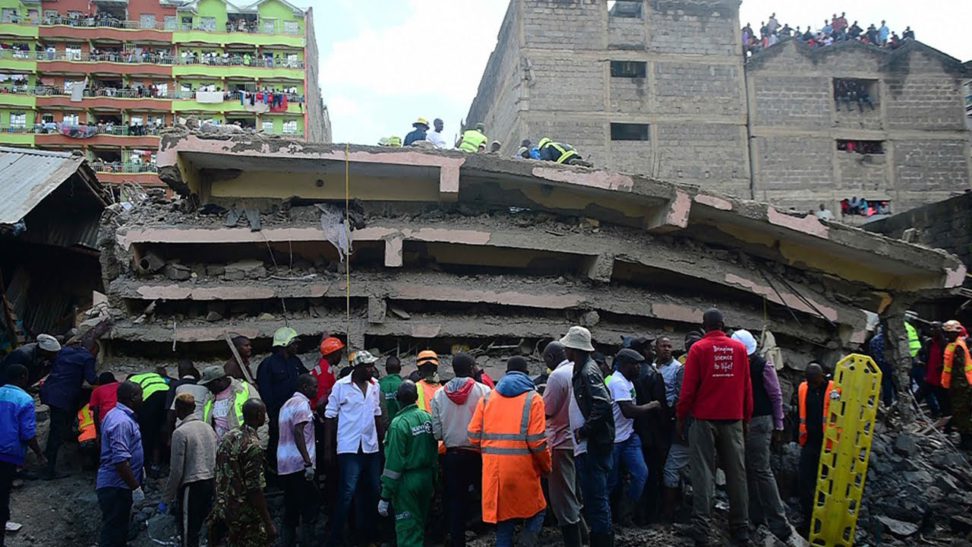
When a five-storey building collapsed in Makindye in 2020, killing 13 people, the country was left in shock. The tragedy exposed deep cracks in Uganda’s construction sector and raised serious questions about professionalism and supervision in the industry.
Investigations by the National Building Review Board (NBRB) revealed that the so-called “professional” overseeing the site was a Senior Four leaver with only a certificate in bricklaying from a technical institute.
When asked how he managed to build multi-storey structures, he said he was using his “experience,” claiming that after decades in the field, he could construct without drawings.
That statement, “I build from experience”, sums up a major problem in Uganda’s construction sector: unqualified people managing projects meant for professionals.
Who are the professionals?
Professionals in the built environment are trained, certified, and registered experts who design, supervise, and manage construction works. They include architects, engineers, quantity surveyors, physical planners, and construction managers.
Their work determines how Uganda’s towns and cities grow; safely, sustainably, and efficiently. Every strong, well-designed building you see across Kampala, other cities and towns must have a team of professionals behind it.
To be recognised as a professional, one must be registered with the relevant statutory body, namely the Engineers Registration Board (ERB) for engineers, the Architects Registration Board (ARB) for architects, and the Surveyors Registration Board (SRB) for surveyors.
These institutions enforce professional ethics and standards to ensure that registered practitioners deliver safe and quality work.
Uganda has few registered professionals in the built environment, yet the demand for construction services continues to rise. The shortage has allowed unqualified individuals to fill the gap, often with disastrous results.
Lessons from Makindye
The Makindye collapse is not an isolated case. Similar incidents have occurred in Kansanga, Kisenyi, and Jinja, leading to injuries, deaths, and loss of property. In almost all cases, investigations have pointed to poor supervision, weak foundations, and substandard materials. Issues that professionals are trained to prevent.
“Buildings are not just walls and roofs,” says Eng. Flavia Gutto Bwire, the Executive Secretary of the National Building Review Board. “They are systems that require proper design, analysis, and inspection. Without qualified professionals, you are gambling with lives.”
Legal requirement
The Building Control Act (Cap. 136) and the Building Control Regulations (2020) make it mandatory for certain categories of buildings — especially high-rise and commercial developments — to be designed and supervised by registered professionals.
Urban and District Building Committees are not allowed to approve plans for Class A and B buildings without the involvement of Registered professionals. Therefore, any developer who undertakes such projects without professional input is breaking the law and risks penalties, suspension of works, or demolition of the building.
Safeguarding your investment
For many Ugandans, putting up a building is a lifetime investment. Whether it’s a rental apartment in Wakiso or a shopping complex in Mbale, one wrong decision can lead to financial ruin.
Professionals protect that investment. An architect ensures that the design is functional, beautiful, and compliant with planning standards. An engineer guarantees structural integrity.
A quantity surveyor manages the budget and prevents waste. Without professional guidance, developers often face project delays, unnecessary costs, and poor workmanship that reduces the value of their property.
Building safety and quality assurance
Uganda’s growing list of building collapses shows what happens when safety is neglected. Registered professionals follow technical standards and quality controls that ensure materials are used correctly and structures can withstand both human and environmental pressures.
A professional’s stamp or signature on building drawings is a mark of accountability. It means the person can be held responsible if something goes wrong — a safeguard that does not exist when unqualified builders are in charge.
Access to modern technology and innovation
Uganda’s construction industry is modernising fast. Technologies such as Building Information Modelling (BIM), solar integration, and green construction materials are changing how projects are designed and executed.
Professionals are trained to adopt and apply these innovations. Architects are designing energy-efficient buildings that lower electricity bills, while engineers are introducing cost-effective, durable materials suitable for Uganda’s environment.
As the country pushes towards industrialisation under Vision 2040, professional expertise will be key to achieving sustainable growth.
Why it matters
Engaging professionals is not just about following the law — it is about responsibility, safety, and value. Every building represents someone’s dream and often, their life savings.
When qualified experts are involved, the results speak for themselves: durable buildings, fewer accidents, and better returns for investors. Therefore, the Makindye tragedy and many others remain a painful reminder that “experience” is no substitute for training and professionalism. As Uganda’s towns and cities expand, the need for registered experts in the built environment cannot be ignored.
Developers must ensure that every project from a small shop to a skyscraper is handled by certified professionals. It is the only way to protect lives, safeguard investments, and build a future that stands the test of time.
In construction, professionalism is not optional. It is the foundation of a safe and sustainable Uganda