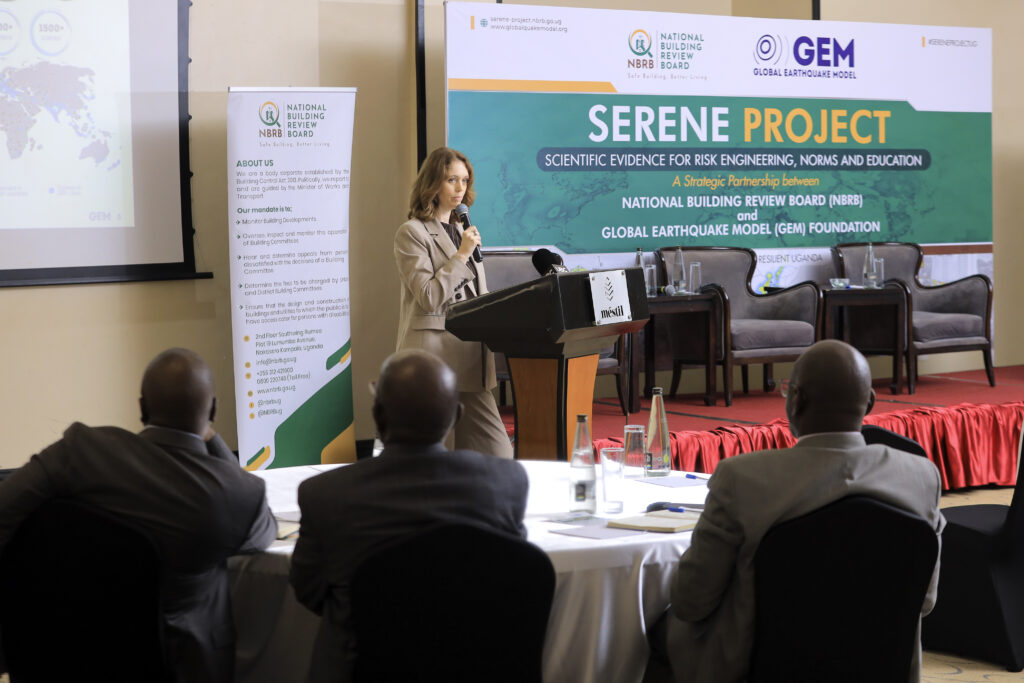
The Global Earthquake Model (GEM) Foundation has pledged long-term technical support and knowledge transfer to Uganda following the official launch of the Scientific Evidence for Risk Engineering, Norms and Education (SERENE) Project.
The project is a strategic partnership with the National Building Review Board (NBRB) aimed at strengthening seismic risk management and safer infrastructure development.
Speaking at the launch event held at Mestil Hotel in Kampala, Helen Crowley, General Secretary of the GEM Foundation, described the initiative as the beginning of a sustained collaboration focused on science, capacity building, and resilient development.
“Today is not simply the launch of a project. It is the start of a long-term effort to strengthen the evidence, institutions and practice needed for safer development in Uganda,” Crowley said.
“GEM’s message is clear; science has the greatest value when it is not only published, but used in practice to guide real decisions on safety, planning and resilience.”
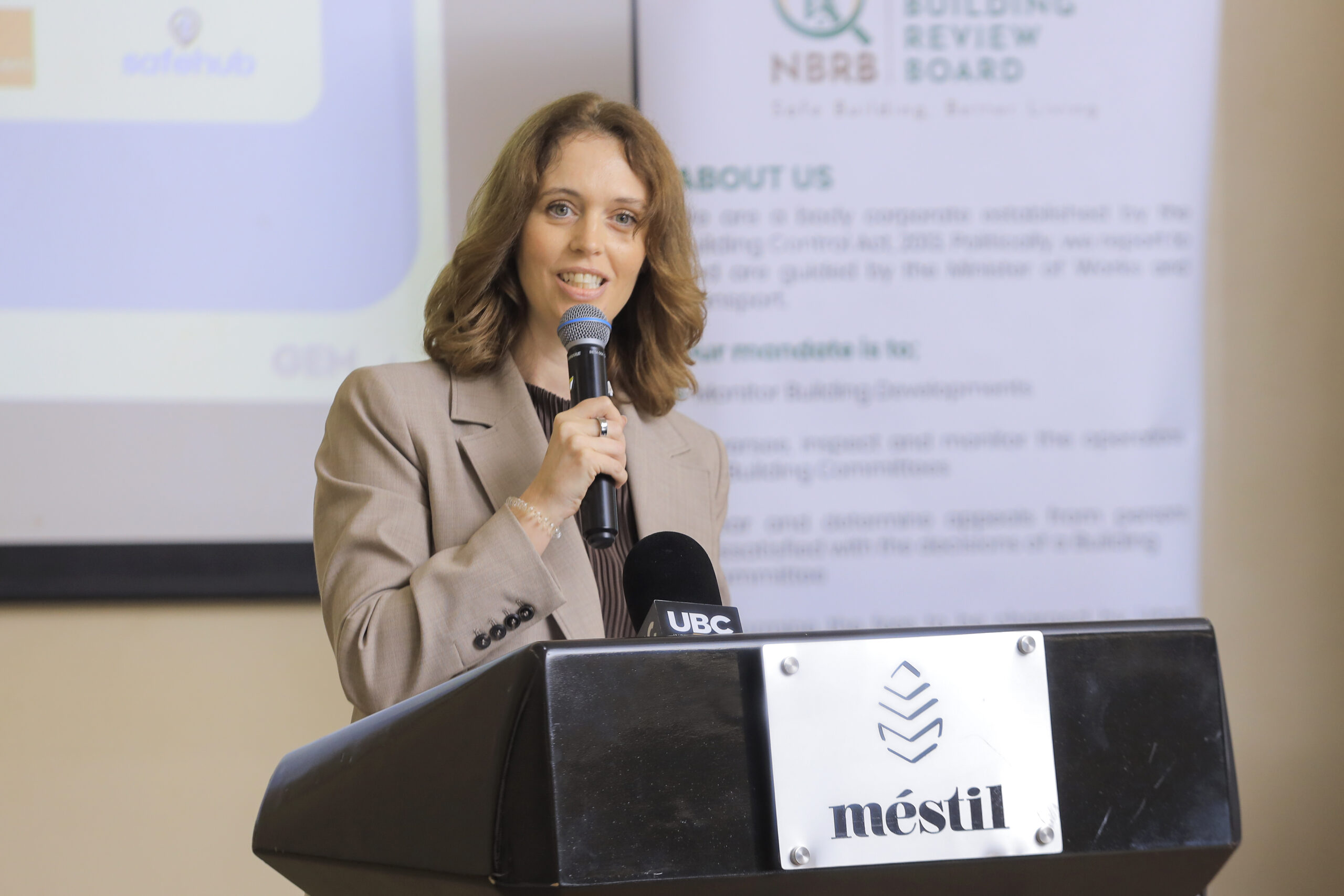
Crowley said GEM was proud to partner with Uganda through NBRB, noting that the collaboration reflects a shared commitment to turning scientific evidence into practical action for public safety.
Crowley commended NBRB for its leadership and ambition in shaping the project, saying the Board had demonstrated seriousness in building institutional and technical capacity.
“From GEM’s side, we are genuinely delighted to enter into this new partnership,” she said, adding that the project combines global expertise with local knowledge and institutional leadership.
“At the heart of this partnership is a shared belief in openness, collaboration, credibility and public good as the basis for stronger risk knowledge.”
“Through SERENE, Uganda is taking a major step toward building the scientific basis for engineering practice, regulations, education and safer development,” she continued.
The GEM Foundation, a non-profit scientific organisation based in Italy, specializes in earthquake hazard and risk assessment tools used across the world.

According to Crowley, the organization’s work is grounded in principles of openness, collaboration, credibility, and public good.
She highlighted that one of GEM’s flagship tools, the OpenQuake Engine, has been applied globally in seismic hazard and risk assessments, including support for building code development in countries such as New Zealand, Australia, Indonesia, and the Philippines.
Crowley also pointed to GEM’s experience in other countries, including Bangladesh and El Salvador, where the Foundation has supported governments in developing national risk preparedness systems and rapid impact assessment platforms.
A significant milestone announced during the event was the recent inclusion of NBRB on GEM’s Governing Board, making it the first national public institution to receive full participation in GEM’s strategic governance structure based on merit and partnership quality rather than financial contribution.
“This is a significant step. It reflects the seriousness of NBRB’s engagement and its commitment to building long-term technical and institutional capacity,” Crowley said.
“GEM is proud to support SERENE, share global experience and tools, and work with Ugandan institutions committed to turning evidence into action,” she mentioned.
She noted that this development places Uganda within a broader global network of public institutions, scientists, engineers, and private-sector partners committed to risk-informed development.
Also representing the Foundation was Yepes Katalina Estrada, Senior Risk Modeller at GEM, who is part of the technical team supporting the project’s seismic modelling work.
According to GEM, the SERENE will focus on generating robust local evidence to support engineering practice, regulatory norms, stakeholder education, and long-term resilience planning.
Among the key outputs expected from the project are a national seismic hazard map for Uganda, detailed exposure models, vulnerability assessments, and what GEM described as the country’s first national seismic risk map in terms of economic loss.
These outputs are expected to support future updates to Uganda’s seismic code of practice for structural designs, the National Physical Development Plan, the National Physical Planning Standards and Guidelines, and the National Policy for Disaster Preparedness and Management.
Crowley said the project was particularly important because it avoids applying a generic external model to Uganda’s context, instead combining international standards and tools with local data, institutions, and expertise.
“Good risk modelling is not just technical; it is collaborative, and it improves when it is grounded in local reality,” she said.
“Uganda can become an important reference in Sub-Saharan Africa, an example of how resilience is built in practice, through institutions, through evidence, and through partnerships that are serious about implementation,” Crowley said.
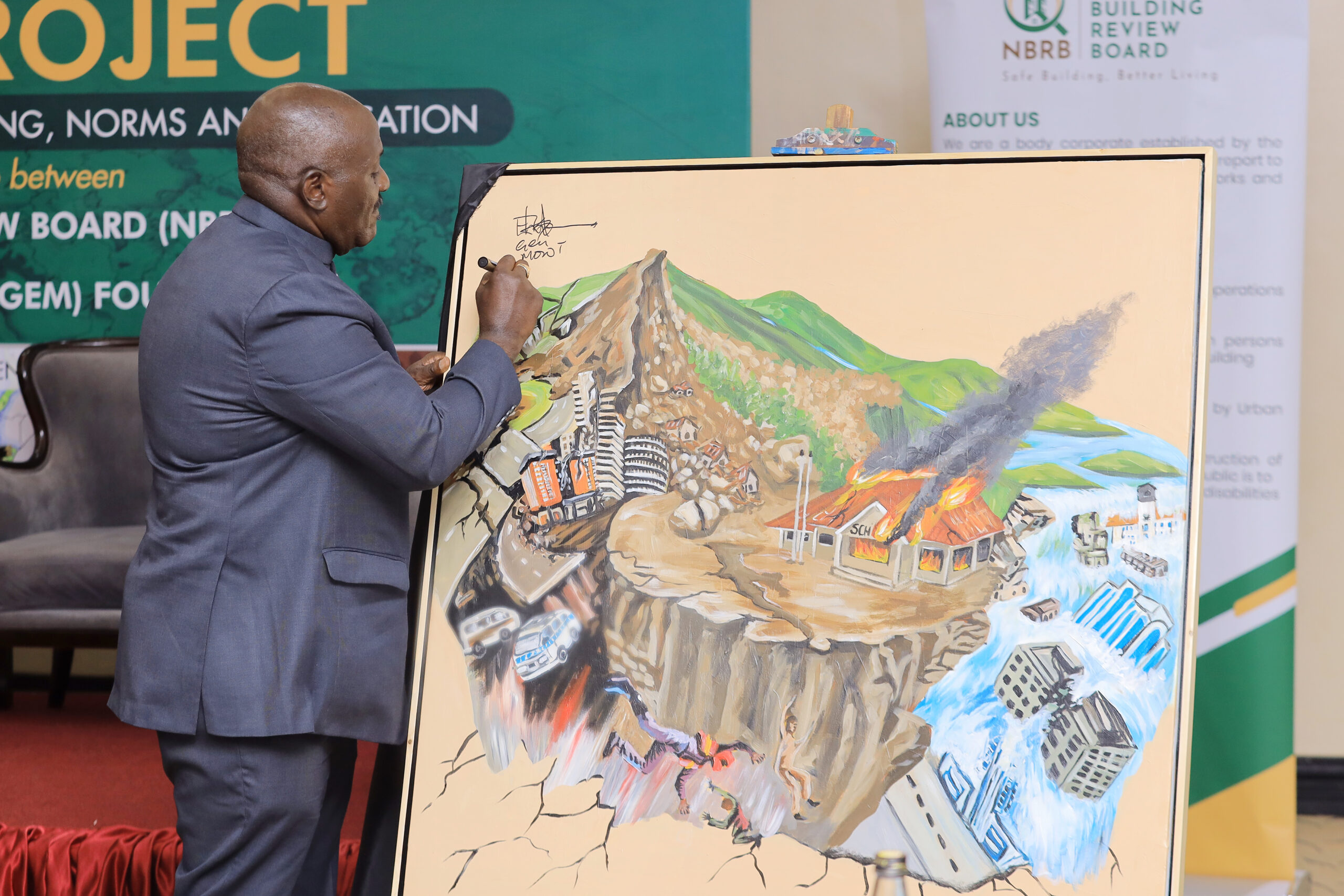
The SERENE Project was officially launched by the Minister of Works and Transport, Gen. Edward Katumba Wamala, who also flagged off the NBRB mobile inspection van during the event.