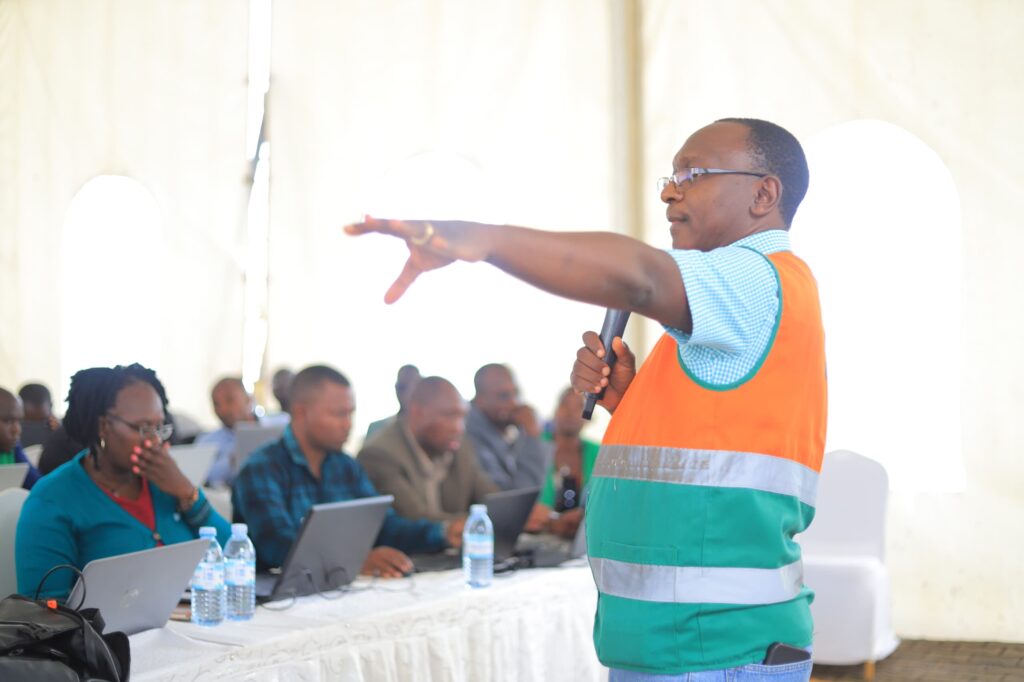
By Eng. Denis Sekitoleko, National Coordinator, Building Control Officers
Physical planning in Uganda is a process that guides the efficient and orderly use of land for the physical, social, and economic welfare of its population.
The legal and institutional framework is primarily defined by the Physical Planning Act, 2010, which declares the entire country a planning area.
The Physical Planning Act establishes a tiered system of planning committees across the country, and these include: District Physical Planning Committee, Urban Physical Planning Committee, Local Physical Planning Committee, all formed by each district council, urban and lower local authorities, and are responsible for preparing local physical development plans and approving development applications.
On the other hand, the Building Control Act, Cap 136 came into play to consolidate and harmonize laws related to building, establish building standards, and ensure a safe and sustainable built environment.
The Act further aims to promote orderly development by requiring buildings to have approved plans and meet technical and safety standards, to prevent the kind of issues seen in the construction sector, such as safety failures.
Since 2018, the National Building Review Board (NBRB) has fundamentally initiated the implementation of this Act through its countrywide campaign of empowering Building Control Officers (BCOs).
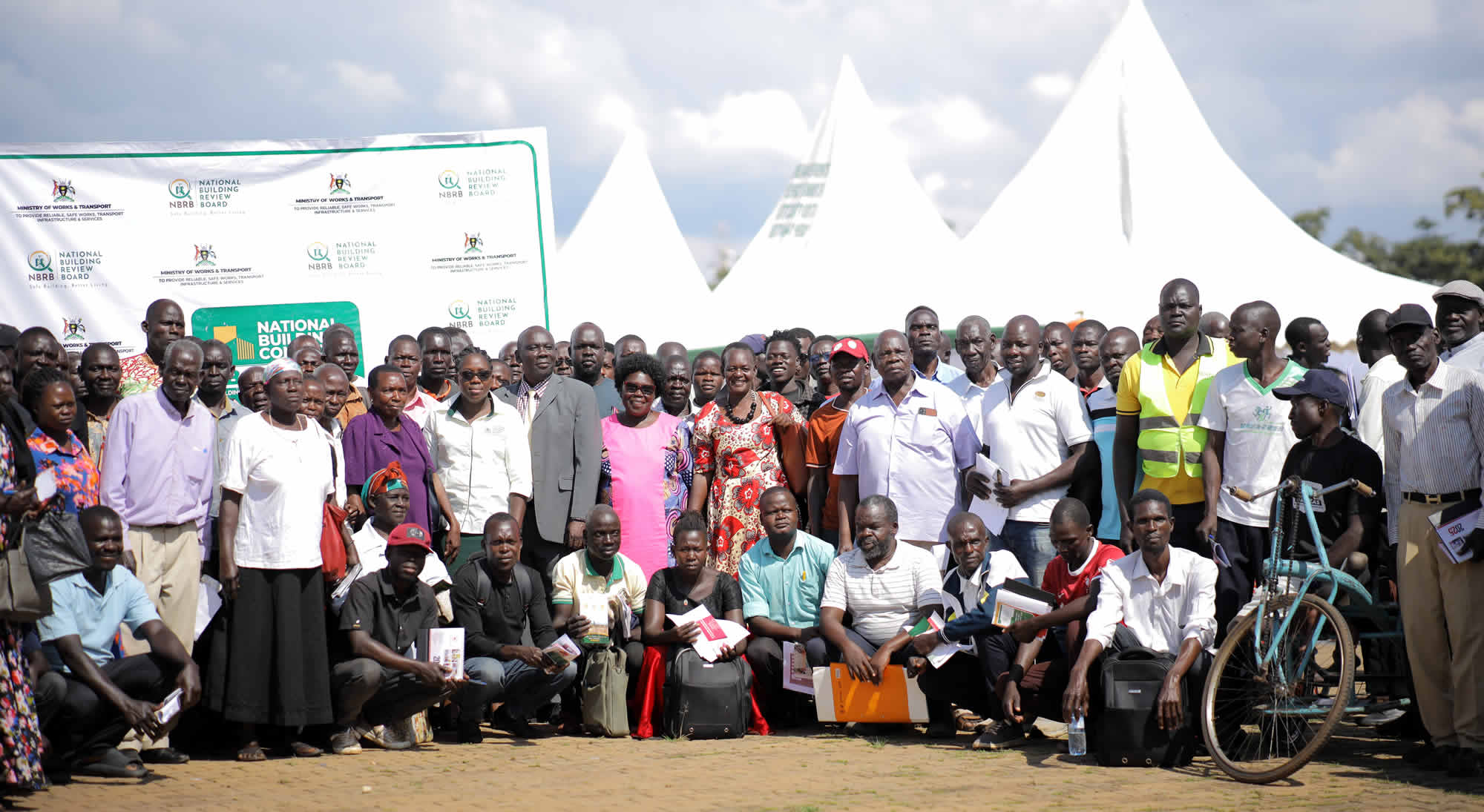
Building control officers (BCOs) in Uganda play a crucial role in ensuring the safety, legality, and quality of construction projects.
Their responsibilities range from regulatory compliance, approval of plans, site Inspection, permit Issuance, enforcement of public safety, record keeping, etc, to collaborating with urban planning authorities, police, fire services, and other relevant agencies to ensure comprehensive building safety management.
To ensure efficiency in their operations, the BCOs, together with Town Council Engineers, Division Engineers, Physical planners, Revenue Officers, and IT officers, have constantly been trained by NBRB mainly on the Building Industry Management System (BIMS), an online platform that digitised all building control processes.
These trainings have been conducted in 14 clusters of Kyoga, Nalubaale, Elgon/Bugisu, Busoga, West Nile, Bunyoro, Acholi, Lango, Karamoja, Teso, Kigezi, Rwizi, Rwenzori and Bukedi.
The clusters are coordinated by cluster coordinators to allow downward planning, popularisation of BIMS and fast tracking of building control activities.
Regional coordinators form a nucleus known as a National Regional Committee headed by the National BCO Coordinator, who serves as the Chairperson.
The National BCO Coordinator coordinates all regional coordinators nationally through the National Regional Committee (NRC), advises the NBRB on BCO capacity gaps and suggests mitigation measures, liaises with the NBRB and other professional bodies on building control matters, addresses and ensures the timely resolution of issues escalated by regional coordinators, and coordinates with the NBRB to plan and organize the Annual Building Control Workshops.
Building plan approvals are now directly linked to revenue collection in Uganda through various fees and taxes levied throughout the process.

The integration of BIMS with revenue administration systems like IRAS aims to improve compliance and revenue generation in local governments. These revenue streams contribute to local government budgets and fund urban development initiatives.
Developers pay fees based on the building’s size (square meters), location (city, municipality, town council, district), and classification (Class A, B, or C). For example, a Class A building costs 2,200 shillings per square meter in a city, while a Class C building has a flat rate of 500,000 shillings in a city.
These fees are set by NBRB and enforced by local authorities, with payments made via electronic transfer or direct bank transfer.
Inspection Fees at pre-construction, during construction, and after-construction also incur fees, determined by the same factors as building permits.
Upon completion, building owners must apply for an occupation permit, which requires paying additional fees based on the building’s size, location and class.
Effective coordination of building control teams in Uganda has fostered transparent and collaborative communication between building control teams, property owners, contractors and other stakeholders.
Coordination efforts encompassing thorough planning, monitoring and inspection protocols have boosted adherence to building standards and regulations, contributing to improved quality and enhanced safety on construction sites.
By prioritizing effective coordination, Building Control Officers in Uganda can contribute significantly to a safe, more sustainable and economically vibrant construction sector.
The wirter is the National Cordinator of Building Control Officers